
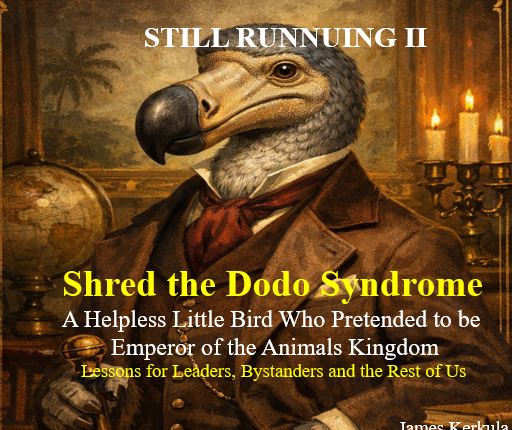
Shred the Dodo Syndrome: A Helpless Little Bird who Pretended to be Emperor of the Animals Kingdom
The Story Behind the Story
When I was about four years old my mother took me to my grandpa’s store in Bong Mines (Liberia) to deliver peanuts and vegetables from her farms—yes, farms. She employed the entire residents of Molly-Gua Town, a tiny village of about 150 residents outside the German mining company, Bong Mines.
While in the store a man dressed in a police uniform came in and demanded my grandpa give him $10 gas money because he was “in hurry to an important meeting” in Monrovia, the nation’s capital. Grandpa gave him the money without saying a word. When I asked grandpa why he gave the money, grandpa simply said, “he’s a Dodo.” I asked my mom what’s Dodo? She promised to show me a Dodo the following day. Later that day we left grandpa and went back to the nearby village where my mom had her various farm projects and missionary activities.
The next day my mom woke me up early in the morning and said, “…ready to go meet Dodo?” I said yes and she asked me to get ready to go to the farm. I got ready and we started walking on the small winding road to my mom’s rice field. I don’t know how long we walked but I could hear my tiny brain saying, “…are we there yet?”
When we got to the farm, Lorpu (my mom’s right-hand person) was sitting on top of a giant ants’ hill helping to drive the birds away from the rice field. Lorpu was a supervisor of the women working on mom’s peanuts farm, but she was also responsible for preparing lunch for everyone on the rice farm.
After greeting Lorpu my mom asked her to go to the peanuts farm; and she (mom) took a half-broken bench on top of the ants’ hill. She told me to sit by her on the bench while we waited for Dodo to come. I asked her where Dodo was, and she said it was hiding somewhere from the other birds.
I asked her why Dodo was hiding from the other birds, and she said she would show me in a minute. She went on, “…when you are grown enough to attend school you might read books about “Dodo without wings to fly; but that’s only half of the story.”
We sat and waited forever on the ants’ hill…or so it seemed. I fell asleep lying on my mom’s shoulder. Then she shouted, “Look! Look!!” Pointing to the sunny blue sky she said, “There’s Dodo.” Then I looked up and saw a group of birds chasing a tiny bird with a long wingspan. Then she said, “… long before humans walk on earth, Dodo behaved like the policeman you saw in grandpa store yesterday.
So, she began to tell the story about the real Dodo:
The Story Behind the Story
When I was about four years old my mother took me to my grandpa’s store in Bong Mines (Liberia) to deliver peanuts and vegetables from her farms—yes, farms. She employed the entire residents of Molly-Gua Town, a tiny village of about 150 residents outside the German mining company, Bong Mines.
While in the store a man dressed in a police uniform came in and demanded my grandpa give him $10 gas money because he was “in hurry to an important meeting” in Monrovia, the nation’s capital. Grandpa gave him the money without saying a word. When I asked grandpa why he gave the money, grandpa simply said, “he’s a Dodo.” I asked my mom what’s Dodo? She promised to show me a Dodo the following day. Later that day we left grandpa and went back to the nearby village where my mom had her various farm projects and missionary activities.
The next day my mom woke me up early in the morning and said, “…ready to go meet Dodo?” I said yes and she asked me to get ready to go to the farm. I got ready and we started walking on the small winding road to my mom’s rice field. I don’t know how long we walked but I could hear my tiny brain saying, “…are we there yet?”
When we got to the farm, Lorpu (my mom’s right-hand person) was sitting on top of a giant ants’ hill helping to drive the birds away from the rice field. Lorpu was a supervisor of the women working on mom’s peanuts farm, but she was also responsible for preparing lunch for everyone on the rice farm.
After greeting Lorpu my mom asked her to go to the peanuts farm; and she (mom) took a half-broken bench on top of the ants’ hill. She told me to sit by her on the bench while we waited for Dodo to come. I asked her where Dodo was, and she said it was hiding somewhere from the other birds.
I asked her why Dodo was hiding from the other birds, and she said she would show me in a minute. She went on, “…when you are grown enough to attend school you might read books about “Dodo without wings to fly; but that’s only half of the story.”
We sat and waited forever on the ants’ hill…or so it seemed. I fell asleep lying on my mom’s shoulder. Then she shouted, “Look! Look!!” Pointing to the sunny blue sky she said, “There’s Dodo.” Then I looked up and saw a group of birds chasing a tiny bird with a long wingspan. Then she said, “… long before humans walk on earth, Dodo behaved like the policeman you saw in grandpa store yesterday.
So, she began to tell the story about the real Dodo: